January 19th, 2026
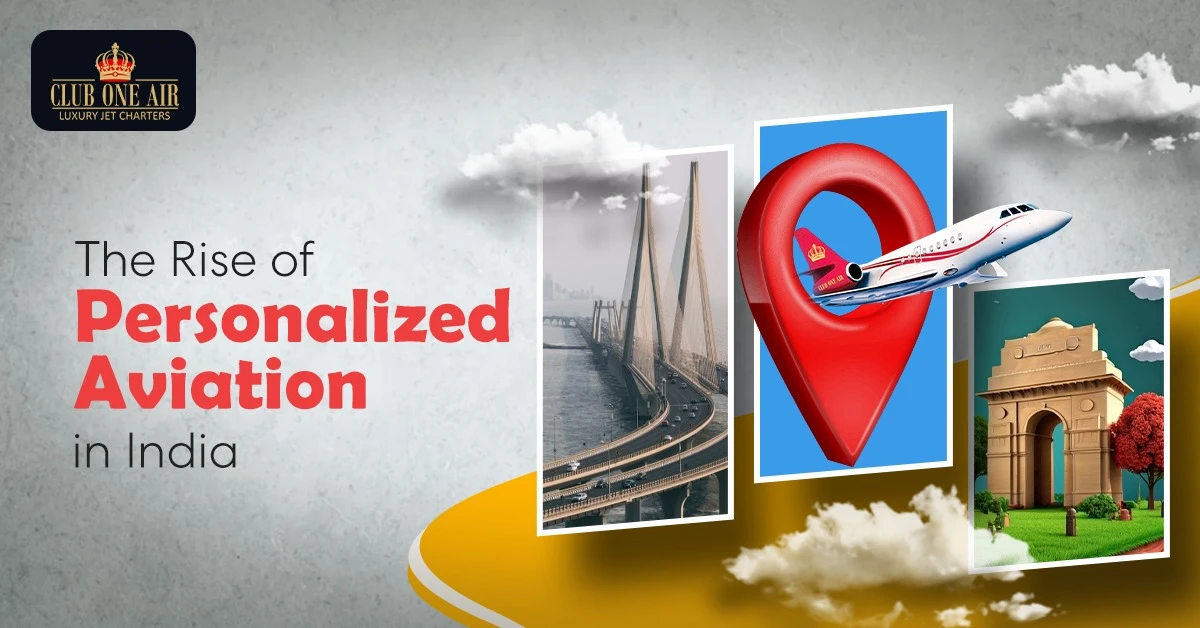
The Rise of Personalized Aviation in India
So you have also entered 2026, like us. So, a very warm welcome.
The last time you considered a more relaxed and comfortable flight was a private jet charter that takes you through the pain of the excessive queues in the airport, past flight delays, and with your own timetable.
Private jet fleets in India have seen a massive growth of 53.2% between 2023 and 2025. Also, India has the largest charter fleet in Asia-Pacific with 121 private jets. This remarkable expansion signals a fundamental shift in how successful Indians approach air travel.
Learn more about the empty leg flights india
The “Efficiency” Economy
The story has changed in 2026, replacing the concept of luxury with utility. Since the last decade, we have witnessed that business tycoons are celebrating their private jet’s journey.
This is where the private jet charter comes in. It’s not about the leather seats (though they are nice); it’s about the freedom to set your own schedule.
Statistics show that the demand for charters has surged by over 25% in the last two years, driven not just by the metros, but by the hunger of Tier-2 and Tier-3 cities. The Maharajah way of life has turned into a fast, accurate and controlled overture that is the Mahaverick.
What’s Fueling This Growth?
Rising Affluence & Time Sensitivity
- The middle class in India is on a boom and is predicted to be doubling in 2030.
- The young business proprietors (the average age has gone to 35) view the use of private jets as a productivity tool, rather than a luxury.
- A private jet charter is the ultimate time-saver for busy professionals.
Urban Congestion & Connectivity
- India spends 22 billion dollars per annum as a result of traffic jams.
- By using private aviation, business trips can be transformed into single-day ones.
- UDAN scheme and new airports are opening up accessibility to remote destinations.
Government Support & Modernization
- The modernization of the aviation laws was done under the Bharatiya Vayuyan Adhiniyam 2024.
- Airport redevelopments and reforms of DGCA imply that private flights become smoother and safer.
- An increased number of FBOs (Fixed Base Operators) and private terminals in large cities.
Recommended Read : Private jet Price
Private Jets are Life Savers
While jets are incredible for closing deals, they are even better at saving lives. There is a transformation in the healthcare sector of India. We have state-of-the-art hospitals, but they are not always nearby with the patient.
The best air ambulance services are in high demand, as at the time of the medical emergency, geography is no longer a death sentence.
We are seeing a surge in “bed-to-bed” transfers where a critically ill patient in a remote part of Assam can be airlifted to a super-specialty facility in Gurugram in a matter of hours, with an ICU in the sky.
Ownership Without the Headache
The aviation regulations, pilot recruitment and maintenance inspections are complex enough to make anyone have a headache.
This is why smart owners are turning to professional aircraft management services. It’s like having a concierge for your jet. You own the asset, but experts (like us at Club One Air) handle the grit.
Plus, with the government’s new push for leasing hubs in GIFT City and the 2026 Budget’s focus on easing aviation taxes, owning and managing an aircraft in India has never been more financially viable.
Connecting the Unconnected
A major driver of this rise is the government’s UDAN (Ude Desh ka Aam Nagrik) scheme, which has successfully revived over 50 unserved airstrips. Commercial 737s can’t land on small, remote runways, but a private turboprop or a light jet can.
This has created an Indian map open to the entire world. Now you can easily fly to industrial congestion points or high-end escapes that used to require a torturous 10-hour drive to reach.
The Final Approach
In India, personalized aviation is not an option; it is a strategic need. It can be a CEO who is closing a deal, or a family who wants to be sure they are safe on vacation, or a patient who wants to be sure they can be attended to; the sky is now open to all the users who have an interest in their time.
At Club One Air, we were drawing this road well before it became a trend. We realize that the way you do things is like your fingerprint. Next time you gaze up into the sky, then, you should remember: there is no space there.
Frequently Asked Questions (FAQs)
Q1: How much does it cost to charter a private jet in India in 2026?
A: Prices differ depending on the type of aircraft and time. A turboprop for short distances might start around ₹1.5 – ₹2 lakhs per hour, while mid-size luxury jets can range from ₹3.5 lakhs to ₹6 lakhs per hour. Prices are, however, subject to changes in the cost of fuel and landing fees.
Q2: Can air ambulances fly to small cities in India?
A: Absolutely. The benefits of using air ambulances can be summarized as the fact that big commercial airplanes cannot access smaller regional airports (and sometimes even helicopters at hospitals), which provides an opportunity to the patients in Tier-2/3 cities to receive timely assistance.
Q3: Is it better to own a jet or charter one?
A: It relies on the number of hours you are going to fly. When you fly less than 150-200 hours in a year, then chartering is generally more cost-effective. When your flights increase, then a purchase may be a good idea, but you will have to engage aircraft administration services to manage the complicated regulatory and maintenance impacts.
Q4: What are “Empty Leg” flights?
A: An empty leg happens when a private jet is used for a flight that is empty to re-position it to accommodate the next client on a booking. The flights are usually sold at a significant discount (even down to a 50-70 percent discount), giving an excellent means to fly privately cheaply.
Q5: Are private jets safer than commercial airlines?
A: Every safety standard (such as DGCA guidelines) applies to reputable private charter operators (such as Club One Air). Our private jets also provide the bonus of safety, lesser exposure to the crowds, and straight paths.
Q6: What is the future of air taxis (eVTOL) in India?
A: We believe that in the next 1-2 years, with trials, short-haul air taxi services will be available in large tech centres such as Bengaluru, Mumbai and Delhi, and will significantly improve city commute time.